


Indoor to Outdoor Climbing UK: The Skills Indoor Walls Don’t Teach You


Indoor climbing is often where the journey begins.
Across the UK, thousands of climbers start in bouldering gyms and climbing walls — building strength, confidence, and a real love for the sport. But when those climbers head outside for the first time, many are surprised by how different outdoor climbing feels.
If you’ve ever thought:
“I’m strong indoors but feel lost outside”
“Why does this easy outdoor route feel so serious?”
“I don’t feel ready, even though I climb hard at the wall”
— you’re not alone.
This article explains the key skills involved in indoor to outdoor climbing in the UK, and why gyms simply can’t teach everything you need for real rock.
Indoor vs Outdoor Climbing: Why It Feels So Different
Indoor climbing walls are designed to be:
Safe
Predictable
Accessible
Focused on movement and fitness
Outdoor climbing is shaped by:
Natural rock
Variable conditions
Personal responsibility
Complex rope systems
Neither is “better” — but they require very different skill sets.

1. Route Reading Without Coloured Holds
In a climbing wall:
Routes are colour-coded
The line is obvious
You know exactly where to climb
Grades are based on the route setter (could be soft, could be harder)
Outside in the UK:
Nothing is marked
Holds blend into the rock
The route may be subtle or vague
Routes generally follow a line of 'weakness' or a natural feature. But not always
Outdoor climbers must learn to:
Read guidebook descriptions and topos
Identify cracks, breaks, edges, and ledges, for example.
Choose a line based on features, not colours
Adjust when the route isn’t obvious
Identify small footholds and places of rest
These skills are often missing for strong indoor climbers — and they're one of the biggest barriers when transitioning from indoor to outdoor climbing.
2. Understanding Real Rock (Not All Holds Are Equal)
Plastic holds are:
Solid (Holds may spin!)
Clean(ish)
Designed to be pulled on
Obvious
UK rock:
Can be polished, sandy, wet, sharp or friable
Varies hugely between crags and rock types
Sometimes break
Cold
Did I mention they can be wet!
Outdoor climbing teaches:
How to test holds before committing
When to trust friction instead of pulling
Why footwork matters more than strength
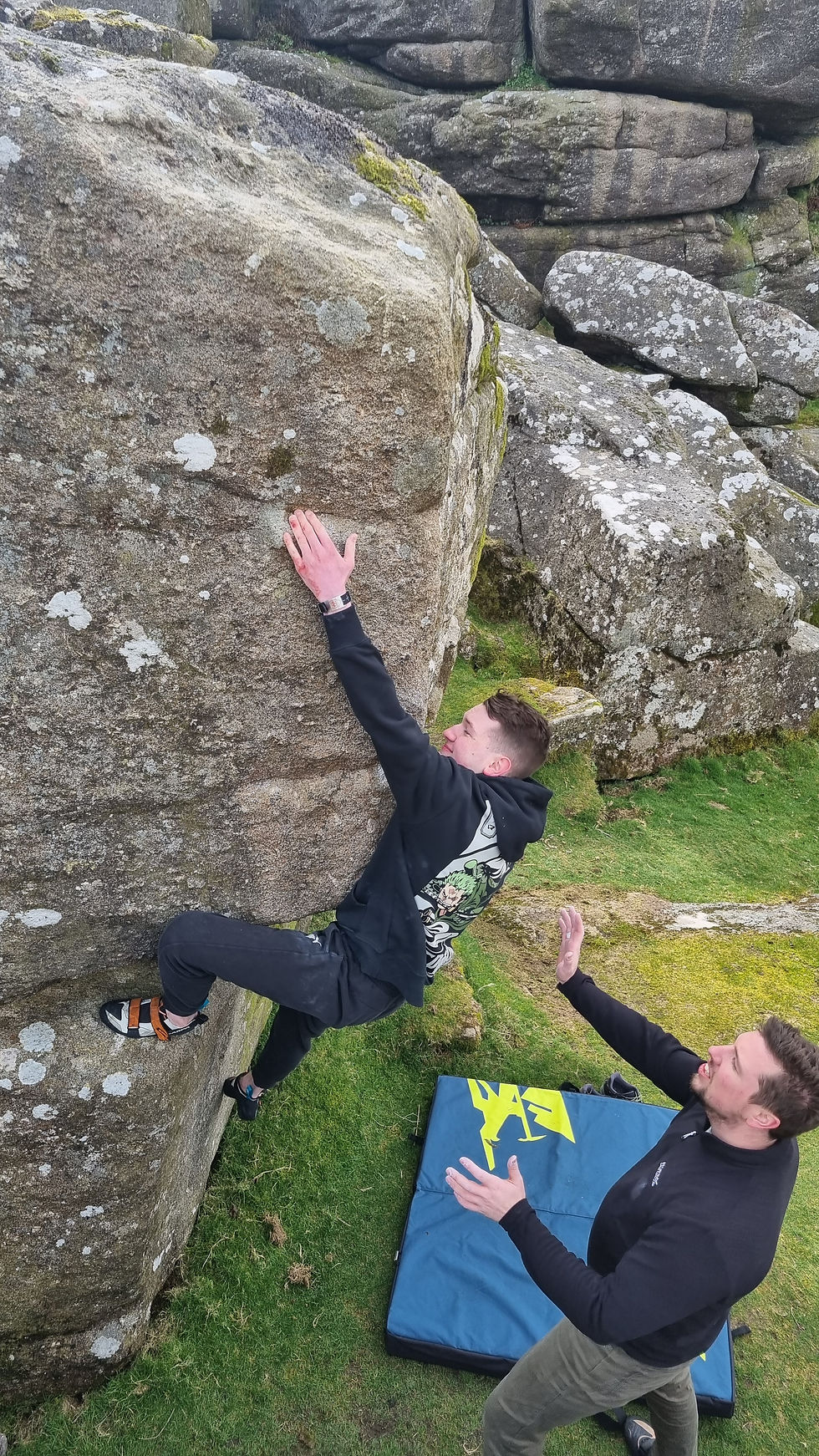
Yes, that Quartz crystal is a crucial foothold/handhold!
Many indoor climbers initially overgrip outdoors — learning to climb lighter is part of the transition.
And trust those feet!
3. Falling Is No Longer Guaranteed to Be Safe
In climbing walls:
Falls are expected
Bolts are close together
Belays are fixed and tested
Routes are generally straight
Outdoors:
Bolt spacing (and quality) varies
Trad protection quality matters
As does the rock quality
Ledges, slabs, and traverses change fall consequences
Climbing mindset and fear of falling needs to be understood
This doesn’t mean outdoor climbing is unsafe — but it does require judgement.
Key outdoor skills include:
Understanding fall lines...
...And fall factors.
Knowing when a fall is acceptable (and when it isn’t)
Managing fear instead of ignoring it
This is particularly important for strong indoor climbers moving onto outdoor sport or trad routes.
4. Rope Systems Indoor Walls Don’t Teach
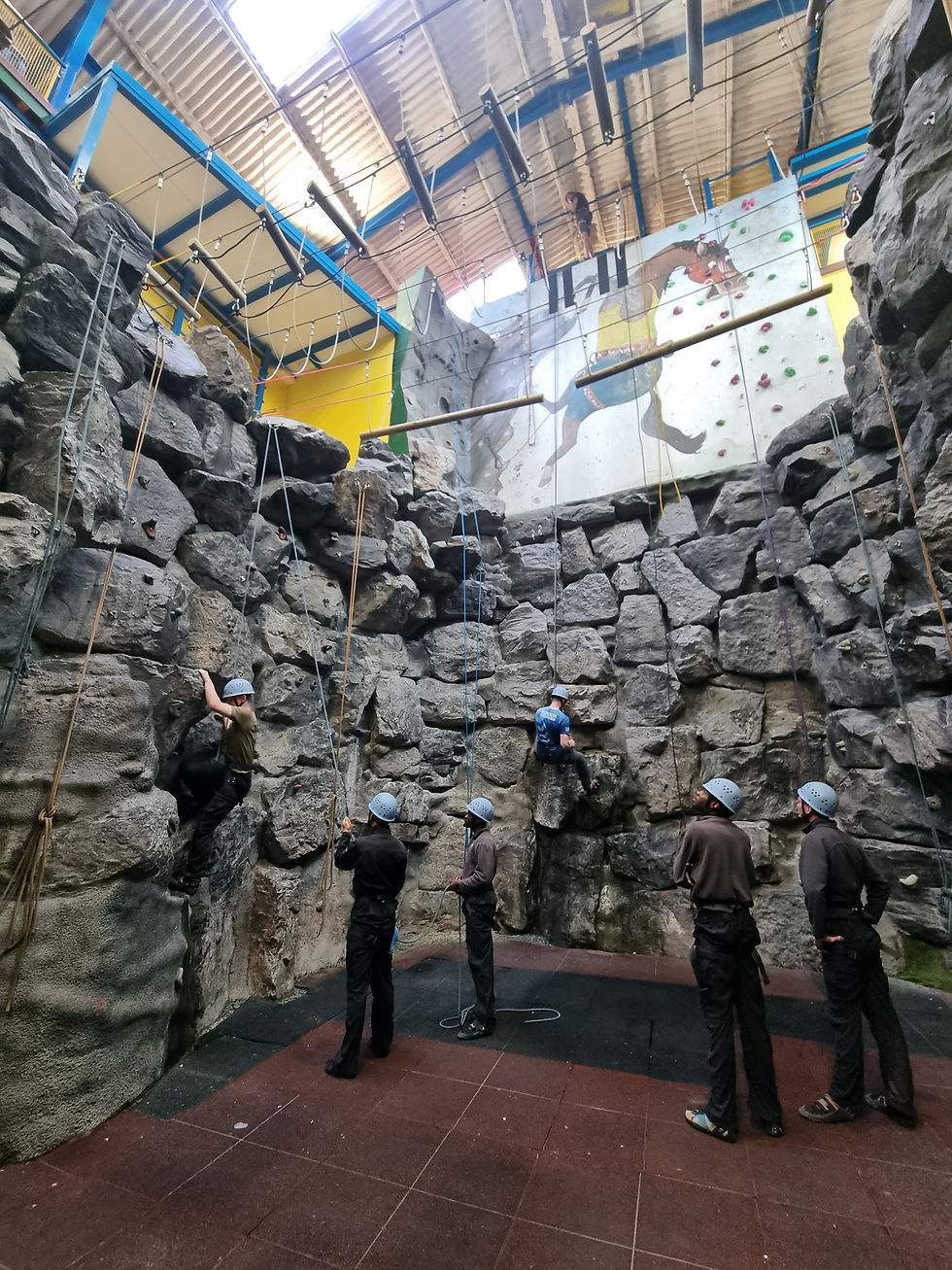
Indoor walls intentionally simplify systems.
Outdoor climbers must learn:
Anchor building
Belaying from stances
Managing rope drag
Multi-pitch changeovers
Communication over distance and wind
Safe descents and abseils
Threading a lower-off
For beginners, this can feel overwhelming. For strong wall climbers, it’s often the missing link that holds them back.
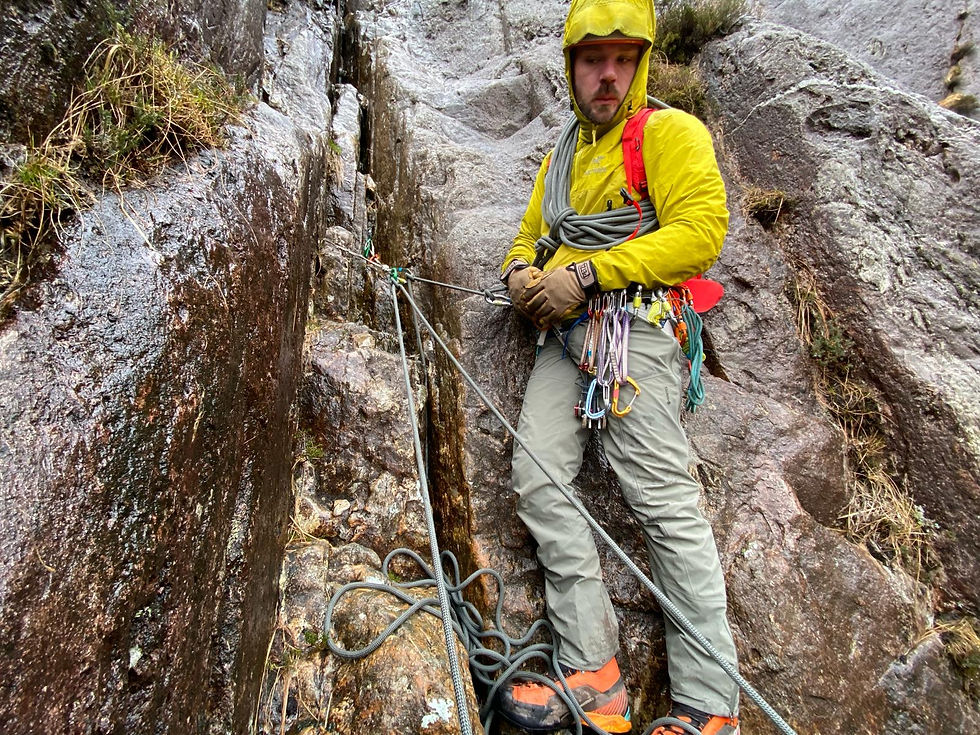
Anchors, krabs and bolts are all inspected and checked in Indoor walls YOU have to place the protection and build the anchors outdoors
5. Trad Climbing Skills (A Big UK Difference)
Trad climbing is central to UK outdoor climbing — and completely absent from indoor climbing walls.
Learning trad involves:
Placing nuts, hexes and cams
Assessing rock quality
Building solid belays
Protecting traverses
Understanding retreat options
Plus much, much more!
Trad climbing isn’t about bravery. It’s about careful decision-making and conservative judgement.
This is why structured learning is so important when making the indoor to outdoor climbing transition in the UK.
6. Environmental Awareness & Planning
Indoor climbing happens in a controlled environment.
Outdoor climbing in the UK means:
Rapid weather changes
Wind, cold, heat, and seepage
Polished limestone or damp gritstone
Long walk-ins and complex descents
Leave no trace!
Outdoor climbers must learn:
When not to climb
How to plan routes and timings
How to manage daylight and conditions
How to retreat safely if plans change
This is where climbing overlaps with mountaineering — especially on multi-pitch routes.
7. Personal Responsibility & Decision-Making
The biggest shift from indoor to outdoor climbing is responsibility.
In an indoor climbing wall:
Risk is managed for you
Risk is managed by the Centre
Outside:
You manage the risk
You check systems
You make the calls
This can feel intimidating — but it’s also what makes outdoor climbing so rewarding.
Good outdoor climbers aren’t fearless. They’re thoughtful, methodical, and conservative.
Is Indoor Climbing Good Preparation for Outdoor Climbing?
Absolutely — but it’s only part of the picture.
Indoor climbing builds:
Strength
Movement skills
Confidence
Consistency
Outdoor climbing requires:
Technical systems knowledge
Environmental awareness
Judgement and decision-making
Think of indoor climbing as learning the movements. Outdoor climbing is learning the craft.
The Best Way to Transition from Indoor to Outdoor Climbing in the UK
The safest and most enjoyable way to move outside is to:
Learn progressively
Outdoor bouldering
Bottom roping routes
Seconding a lead climber
Learn to lead
Build skills under supervision
Climb with experienced partners or instructors
Join a climbing club!
Popular progression routes include:
These courses exist because indoor walls can’t teach everything — and they help climbers transition confidently and safely.
Final Thoughts
Indoor climbing is a brilliant starting point. And great for those cold, dark winters!
But outdoor climbing asks for more:
More awareness
More responsibility
More skill beyond movement
If you’re a beginner, that’s completely normal. If you’re a strong gym climber, feeling underprepared is common.
The good news? These skills can be learned — and once they are, outdoor climbing becomes one of the most rewarding experiences the UK has to offer.


Comments