


Indoor to Outdoor Climbing: Your First Time Climbing Outdoors


Making the move from indoor to outdoor climbing in the UK is exciting—but it often comes with a steep learning curve.
UK outdoor climbing is very different from climbing walls. Routes aren’t colour-coded, the rock is more subtle, anchors aren’t obvious, and you’re suddenly responsible for far more than just tying in correctly.
Whether you’re a regular indoor climber heading outdoors for the first time or a complete beginner curious about real rock, this guide explains what to expect—and how to make your first outdoor climbing experience safe, enjoyable and confidence-building.
Making the Move from Indoor to Outdoor Climbing in the UK
Climbing outdoors in the UK introduces new skills, new risks and a very different pace. Your first day outside isn’t about performance—it’s about learning how outdoor climbing actually works.
Expect things to feel unfamiliar at first. That’s completely normal.
Indoor to Outdoor Climbing: What to Expect on Your First Day
The Rock Feels Very Different to Plastic Holds
Outdoor rock has:
Fewer obvious handholds
Subtle foot placements
Slopers, cracks and smears
Greater reliance on friction and balance
Hard on your skin!
Most climbers find they climb several grades lower outdoors to begin with. This isn’t a lack of strength—it’s a new skillset.
Many climbers improve fastest when someone helps them learn how to read real rock and move efficiently on it. This is a core focus of Indoor to Outdoor Climbing courses, where movement skills are taught directly on natural rock.
There Are No Colour-Coded Routes Outdoors
Outdoors, routes are identified using:
Guidebooks
Natural features in the rock
Experience and judgement
Learning how to spot the line of a climb is one of the biggest changes when moving from indoor to outdoor climbing—and one of the most rewarding skills you’ll develop.
If route-finding feels confusing at first, that’s expected. Introductory outdoor climbing days focus heavily on recognising features and understanding how routes flow through the rock.
UK Outdoor Grades Feel Tougher Than Indoor Grades
UK climbing grades take into account:
Sustained difficulty
Exposure
Protection quality
Seriousness
A climb graded VDiff or Severe can feel surprisingly challenging if you’re new to outdoor movement or uncomfortable with exposure. In an indoor context, a F4 graded route is equivalent* to a Severe graded outdoor climb. And a F6a is equivalent to an E1. But I don't warm up on E1s when I climb outdoors!
*depending on what grade comparison table you look at
Indoor and outdoor grades, in my opinion, are not comparable. There are so many other factors outdoors that effect your climbing performance.
Starting well below your indoor grade is normal and sensible. A guided first day helps you choose routes that feel achievable while still building confidence.
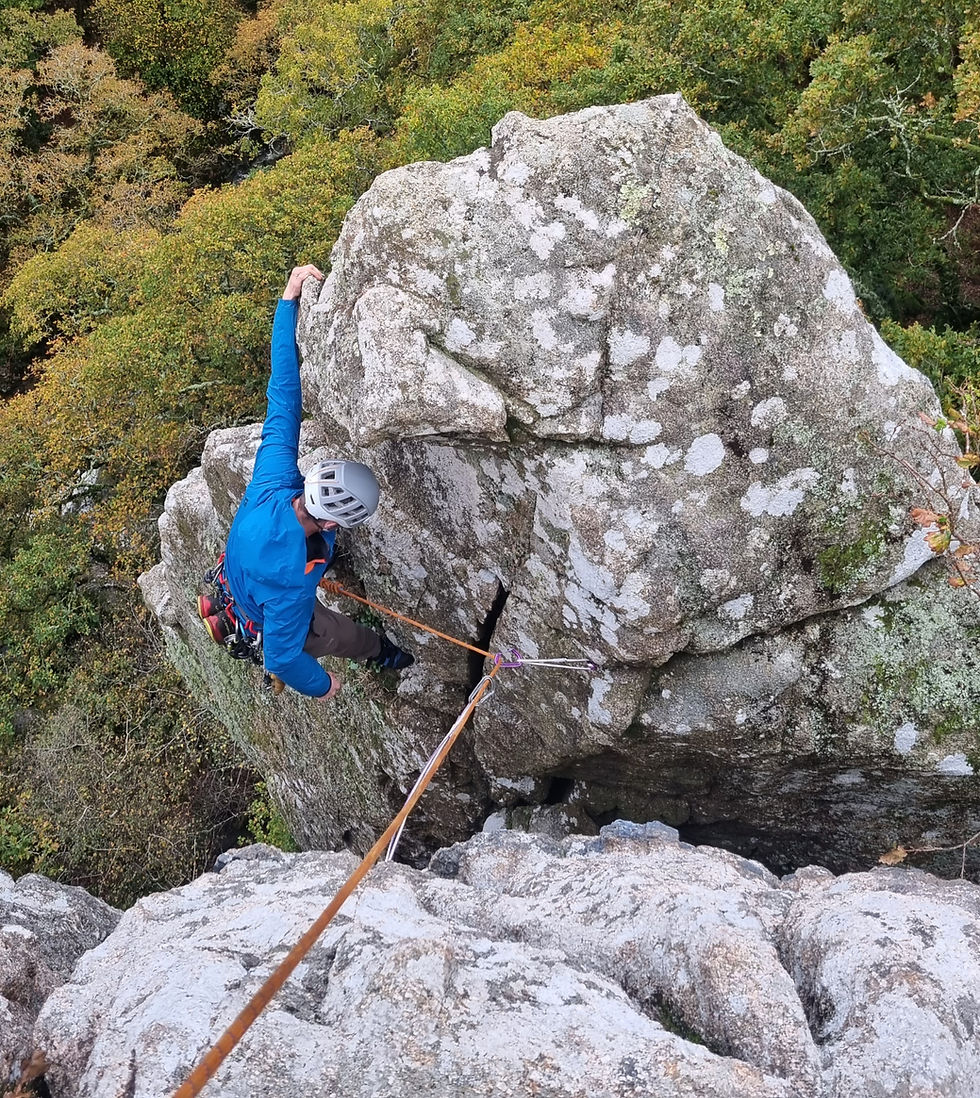
Indoor to Outdoor Climbing: Advice for Indoor Climbers
Strong Indoors Doesn’t Always Mean Comfortable Outdoors
Many experienced gym climbers are surprised by how different outdoor climbing feels. I have guided a strong indoor climber who climbs 7b+, and they struggled with the moves on a HVDiff multipitch climb. The physical ability is there—but the systems, judgement and environment are new.
Common challenges include:
Building belays
Managing ropes
Understanding anchors
Planning safe descents
Heights and exposure
If you’re confident climbing indoors but unsure about outdoor safety systems, an Indoor to Outdoor Climbing course bridges that gap quickly and safely—without taking the fun out of it.
Indoor to Outdoor Climbing: Advice for Total Beginners
You Don’t Need Indoor Experience to Start Climbing Outdoors
Outdoor climbing—especially in the UK—is often more about balance and technique than strength.
Many beginner routes are accessible to people with no indoor climbing background, and progress can actually feel more intuitive on real rock.
Starting with a guided outdoor climbing day removes pressure and allows you to focus on learning, movement and enjoyment rather than worrying about safety.

Everything Takes Longer Outdoors (And That’s Normal)
Your first outdoor climbing day will include:
Learning knots and tying in
Understanding rope systems
Walking to and from the crag
Talking through decisions
This slower pace is part of learning to climb outdoors properly. Courses allow time for this learning without rushing—something that’s difficult to achieve when trying to teach yourself.
Safety Systems: The Biggest Difference in Indoor to Outdoor Climbing
Outdoors, climbers are responsible for:
Building belays
Using natural anchors
Managing ropes at stances
Descending safely
Most climbing accidents happen during setup or descent, not while climbing. Learning these systems correctly early on sets you up for years of safe, confident climbing.
Rope rigging and climbing skills courses focus specifically on these areas, giving you solid foundations before you need them.
How to Prepare for Indoor to Outdoor Climbing in the UK
Before heading outside:
Start well below your indoor grade
Choose beginner-friendly crags
Go with someone experienced
Learn basic rope skills first
If you want your first outdoor climbing experience to feel relaxed, supported and confidence-building, starting with a structured course is often the easiest and safest option.
Ready to Progress After Your First Outdoor Climb?
Once you’re comfortable climbing outdoors, many climbers naturally want to progress to:
Leading outdoors (sport or trad)
Multipitch climbing
Bigger routes and more remote crags
You might enjoy reading next:
Your First Lead Climb Outdoors in the UK (COMING SOON)
Your First Multipitch Climb in the UK (COMING SOON)
These build directly on the skills you learn during your first outdoor climbing experiences.


Comments